



Choosing a rug for a bedroom is about so much more than just covering the floor. It’s that final, crucial layer of comfort and style that turns a room into a sanctuary. The right rug can anchor your furniture, quiet the space, and give your feet a soft, warm welcome every single morning.
Why a Rug Is the Heart of Your Bedroom
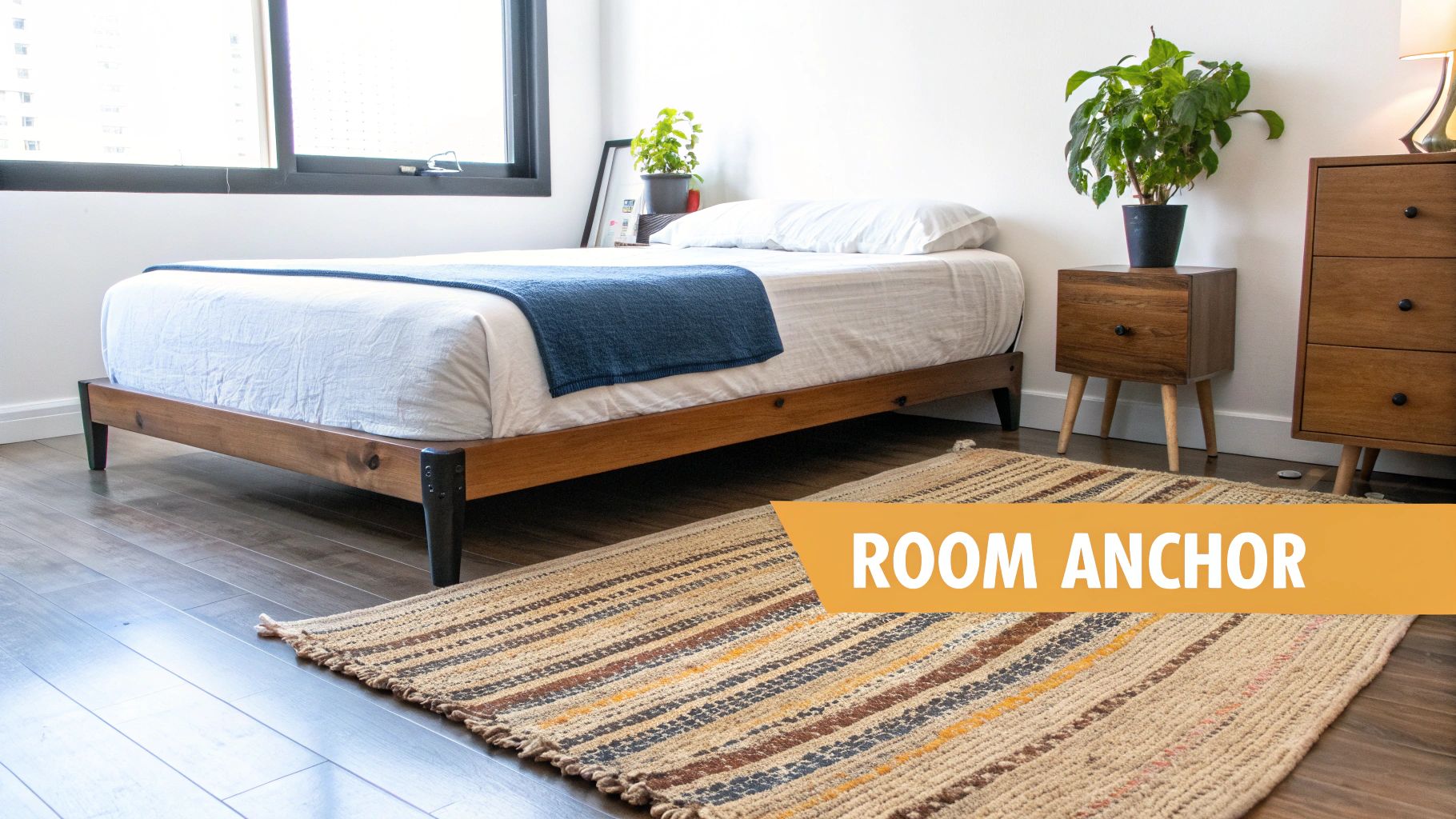
Think of your bedroom layout as a conversation. Your bed, the nightstands, maybe a bench or an armchair – they’re all part of it. The rug is what brings that conversation together. It defines the sleeping area and creates a cohesive, intentional design. Without one, furniture can feel like it's just floating, making the room feel disjointed and a bit unfinished.
A well-chosen bedroom rug introduces all the right elements for a truly relaxing atmosphere. It’s a powerful tool for adding texture, absorbing noise, and injecting a bit of your personality into this private retreat. The real secret is understanding how size, material, and placement all work in harmony to strike the perfect balance.
More Than Just a Soft Surface
While the plush feeling under your feet is undeniably one of the best parts, a bedroom rug is doing a lot more behind the scenes to elevate the entire room. It’s an investment in both your comfort and the overall aesthetic, pulling your whole design scheme together.
Here’s what the right rug really brings to the table:
- It Defines Your Space: A rug creates a visual boundary for your sleeping area, grounding the bed and making the whole room feel more organised and purposeful.
- It Adds Warmth and Comfort: There’s nothing quite like stepping out of bed onto a soft, warm surface instead of a cold, hard floor on a chilly morning.
- It Absorbs Sound: Rugs are brilliant at reducing echoes and background noise, which helps create a more peaceful and tranquil atmosphere perfect for rest. For more ideas on creating a restful space, explore our ultimate guide to perfect sleep and lazy day essentials.
- It Introduces Colour and Texture: This is your chance to add another layer of visual interest, whether it’s through a bold pattern, a pop of colour, or a luxurious high-pile texture.
The biggest mistake people make is choosing a rug that’s too small for the space. A rug should frame your bed, not just peek out from underneath it. Aim for it to extend at least 45-60cm (18-24 inches) on either side of the bed to create a balanced, luxurious look.
This guide will walk you through everything you need to know, from picking the perfect material to mastering the placement rules for a polished, professional finish.
Choosing the Right Rug Material for Your Sanctuary
That first touch of your feet on the floor in the morning can set the tone for your entire day. Choosing the right material for your bedroom rug is about so much more than just colour or pattern; it’s about finding a texture that feels just right for your personal sanctuary. The material you pick dictates everything from softness and durability to how easy it is to clean up a stray coffee spill.
Your lifestyle plays a huge role here, too. A busy household with pets will have completely different needs than a quiet, adult-only space. Let’s break down the most popular options to help you find the perfect match for both your feet and your life.
The Timeless Appeal of Natural Fibres
Natural fibres bring an organic, breathable quality to a room. People often gravitate towards them for their durability, eco-friendly credentials, and classic, grounded aesthetic.
Wool A Natural Champion When it comes to bedroom rugs, wool is the undisputed classic. It's incredibly soft underfoot, naturally resilient, and has amazing insulating properties, keeping your room warmer in winter and cooler in summer. The natural crimp of the fibres allows them to bounce back from crushing, making wool a brilliant choice for areas that see a bit of foot traffic.
This preference for quality and longevity is reflected across the UK. The UK area rugs market, valued at approximately USD 636.1 million in 2024, is projected to grow significantly. It's telling that wool rugs command the largest market share, accounting for over 29% of total revenue. It shows a real consumer demand for natural, high-performance materials in our homes. You can explore more insights into the UK rug market trends on Grandview Research.
- Pros: Exceptionally soft, durable, naturally stain-resistant, and fire-retardant. A real workhorse.
- Cons: Can be more of an investment and may shed a little at first. Best kept out of damp environments.
Cotton Easy and Breathable Cotton rugs, often found in flatweave or braided styles, offer a lighter, more casual feel. They are wonderfully breathable and typically more affordable than wool, making them a fantastic option if you like to switch up your decor. Plus, many smaller cotton rugs are even machine-washable-a practical dream for a low-maintenance bedroom.
Jute and Sisal Earthy and Textured For a more rustic or coastal vibe, fibres like jute and sisal are excellent. While they aren't as plush as wool, they introduce a beautiful, robust texture that really grounds a space. They are incredibly durable and have great eco-friendly credentials.
Pro Tip: Because jute and sisal can be a bit coarse, they are perfect for layering. Try placing a smaller, softer rug-like one from our plush faux fur collection - on top to get the best of both worlds: gorgeous texture and sink-in softness.
The Practical Power of Synthetic Fibres
Don’t dismiss synthetics. Modern materials have come a long way, offering incredible softness, vibrant colours that won't fade, and impressive stain resistance, often at a budget-friendly price point. They are particularly well-suited for households with children, pets, or allergy sufferers.
Polyester and Polypropylene Softness Meets Stain Resistance These are two of the most popular synthetic choices for a rug for bedroom use, and for good reason. Polyester is known for its luxurious softness and rich colour retention, while polypropylene (also known as olefin) is exceptionally stain-resistant and durable, making it almost invincible against spills.
- Best For: Anyone who puts a plush feel, vibrant colour, and easy cleaning at the top of their list. Our shaggy rug collection features many wonderfully soft synthetic options.
- Keep in Mind: They can be more prone to crushing under heavy furniture compared to their wool counterparts.
Viscose The Silk Imitator Viscose is a semi-synthetic fibre made from regenerated wood pulp. It’s known for its silky sheen and luxurious feel, often used as an affordable alternative to real silk. While it looks absolutely stunning, it's not as durable as other materials and is notoriously tricky to clean-water can damage the fibres. It’s best reserved for low-traffic, adult bedrooms where spills are highly unlikely.
Bedroom Rug Material Comparison
To make the decision a little easier, here’s a quick-reference guide comparing the most popular materials side-by-side.
| Material | Feel & Comfort | Durability | Maintenance | Best For |
|---|---|---|---|---|
| Wool | Extremely soft, plush, and warm | Very High | Regular vacuuming, professional clean for deep stains | Ultimate comfort, longevity, and allergy-friendly homes |
| Cotton | Soft and breathable | Moderate | Often machine-washable, easy to spot clean | Casual styles, budget-conscious shoppers, and easy care |
| Polyester | Very soft, plush feel | High | Highly stain-resistant, easy to clean | Homes with kids/pets, vibrant colour schemes |
| Jute/Sisal | Textured and firm | Very High | Vacuum only, blot spills immediately | Natural aesthetics, high-traffic areas, layering |
| Viscose | Silky and luxurious | Low | Professional cleaning only, sensitive to moisture | Low-traffic, decorative areas where luxury is key |
Ultimately, the best material is the one that fits your priorities. By balancing how you want it to feel, how long you want it to last, and how much time you want to spend looking after it, you can choose a beautiful rug for your bedroom that you'll love waking up to for years to come.
Mastering Rug Size and Placement in Your Bedroom
Getting the size and placement of a bedroom rug right is probably the single most important decision you’ll make. It’s what separates a room that feels thoughtful and luxurious from one that feels a bit… off. A rug that’s too small is a classic design mistake, often creating a 'postage stamp' effect that makes a room feel choppy and incomplete.
The real goal here is simple: your rug should act as a visual anchor for the bed and its surrounding furniture, like your nightstands. It pulls everything together, creating a defined zone that just breathes comfort and calm. And honestly, it's easier to get right than you'd think, especially with a few professional guidelines based on standard UK bed sizes.
Matching Your Rug to Your Bed
Forget the guesswork. The secret is making sure your rug is proportionally balanced with your bed. A solid rule of thumb is to have the rug extend at least 45-60cm (18-24 inches) beyond the sides of your bed. This simple trick guarantees you have a soft, generous space to step onto in the morning while creating a beautiful visual frame.
Here’s a quick guide for pairing rugs with common UK bed sizes:
- Single Bed (90cm x 190cm): A smaller 120cm x 170cm rug works well if you place it two-thirds of the way down the bed, leaving the headboard and nightstands on the bare floor. For a more expansive feel, a 160cm x 230cm rug lets you place the bed and nightstands completely on top.
- Double Bed (135cm x 190cm): As the most popular UK bed size, a double pairs perfectly with a 200cm x 290cm rug. This size is generous enough to frame the bed beautifully, extending well beyond the sides and foot.
- King Size Bed (150cm x 200cm): With a King, you need a more substantial rug to keep things balanced. A 240cm x 330cm is a fantastic choice, providing plenty of coverage and a truly luxurious foundation for your sleeping area.
- Super King Bed (180cm x 200cm): For the grandest of beds, you need the grandest of rugs. Look for a large 300cm x 400cm rug to ensure it doesn’t get lost underneath. This size guarantees a wide, soft border all the way around.
Three Professional Placement Strategies
Once you’ve got a handle on the size, the next question is where to put it. There are three classic, designer-approved ways to position a rug for bedroom layouts. Each one creates a slightly different vibe, so you can pick the one that feels right for your space.
1. All Furniture On The Rug This is the most luxurious and cohesive option out there. The rug is large enough to fit the entire bed, both nightstands, and even a bench at the foot of the bed. It creates a unified 'island' that makes a room feel grand and complete. This approach works best in larger bedrooms where you have plenty of floor to show off the rug’s border.
2. Just The Front Legs On A hugely popular and versatile method, this involves placing the rug about two-thirds of the way under the bed. The rug should start just in front of your nightstands and extend past the foot of the bed. It grounds the bed perfectly without needing a massive rug, making it a brilliant, balanced choice for most room sizes.
3. Flanking Runners If you’re leaning towards a more modern, minimalist, or even asymmetrical look, think about skipping the large central rug for two runners instead. Placing a runner on each side of the bed gives you that soft landing spot while leaving more of your beautiful flooring on show. This is a great solution for smaller bedrooms, as it helps create an illusion of width.
A focus on home comfort has become increasingly important. Market data shows that after a sharp dip in 2020, the UK rug market rebounded by an incredible 19.9% in 2021. This surge was driven by a wave of home renovations as people invested more in making their personal spaces comfortable and stylish. You can discover more insights on UK home decor market fluctuations at ReportLinker.
To help you visualise how different materials might look with your chosen placement, this chart breaks down the most popular options.
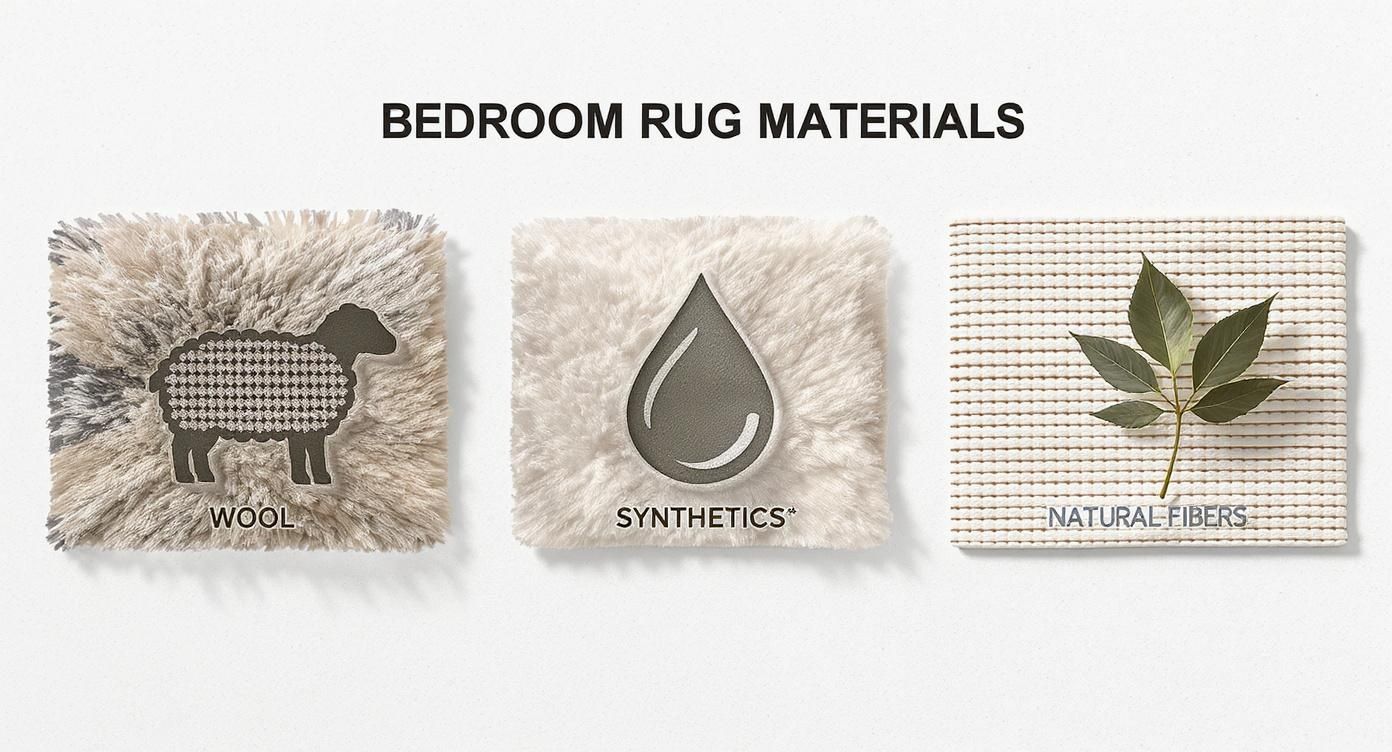
This simple breakdown shows that whether you love the natural resilience of wool or the easy-care nature of synthetics, there’s a perfect material for every bedroom style.
Common Sizing Mistakes to Avoid
The number one mistake people make? Choosing a rug that’s too small. It can visually shrink your room and make even the most expensive furniture look a bit cheap. If you fall in love with a rug that's only available in a smaller size, here’s a great designer trick: layer it. Place your dream rug over a larger, inexpensive natural fibre rug like jute or sisal. This gives you the pattern and texture you want while still getting the scale just right.
For more layout ideas and visual guides, check out our inspiration blog, where we explore all sorts of ways to style your home. By taking a few moments to measure your space and think about these placement strategies, you can confidently choose a rug that not only fits perfectly but completely elevates your bedroom.
Finding a Style That Completes Your Decor
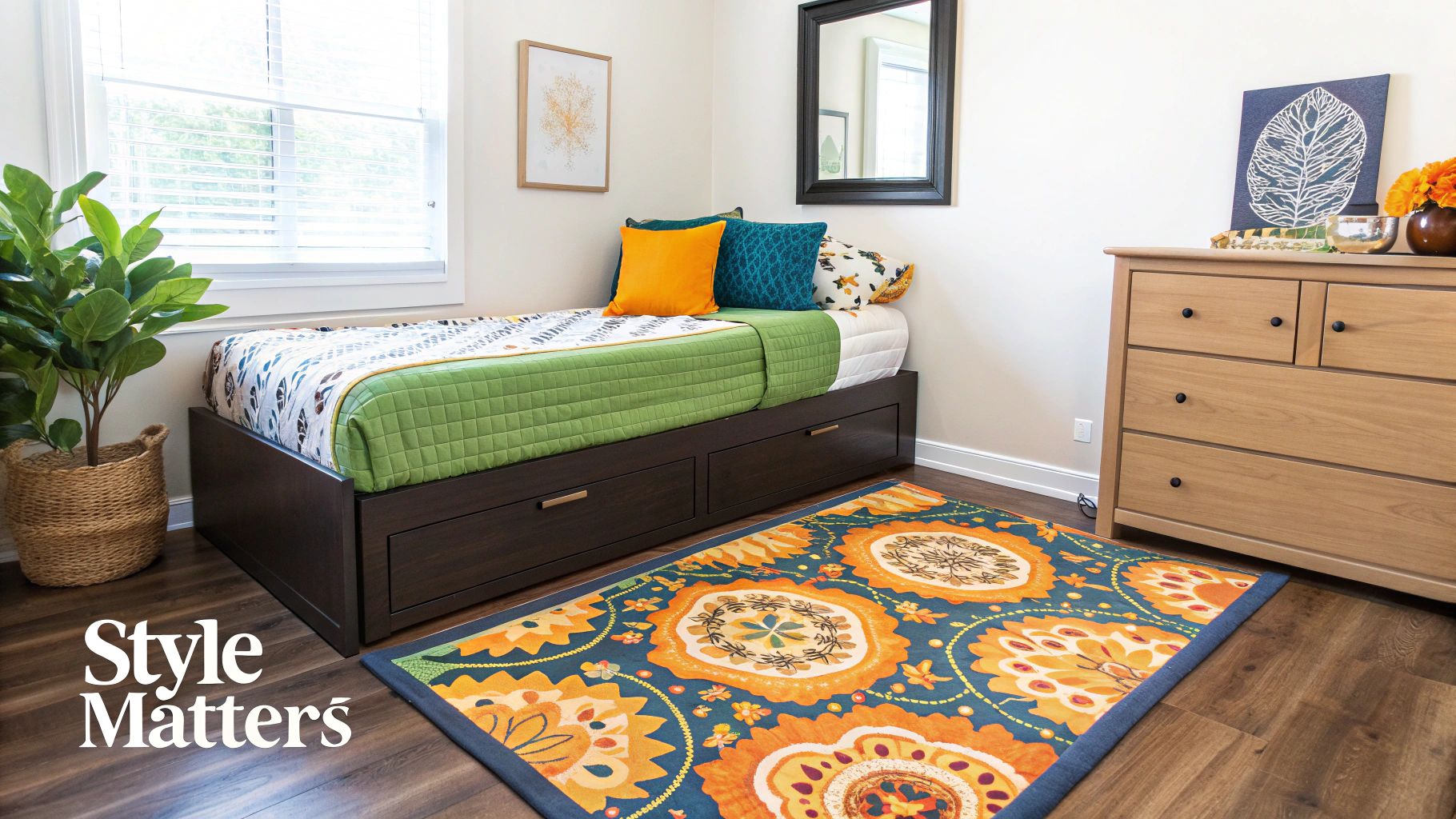
Now that we’ve sorted the practical side of things, like size and material, we get to the fun part: choosing a style that speaks to you. A bedroom rug is an incredibly powerful design tool. It can be a quiet, unifying backdrop that ties everything together or a bold, statement piece that steals the show. The colour, pattern, and texture you choose will completely shape the feeling of your personal sanctuary.
Think of it this way: your rug sets the room’s emotional tone. It’s what transforms a space from just a room with a bed in it to somewhere that feels intentional, polished, and uniquely yours.
Setting the Mood with Colour and Pattern
Colour is the fastest way to change a room's atmosphere. A neutral rug in soft shades of beige, cream, or light grey creates a calm, serene escape, providing a quiet foundation that lets your other decor shine. This is the perfect approach for crafting a minimalist or Scandi-inspired retreat where tranquillity is the goal.
On the other hand, a rug for bedroom use with a bold colour or a vibrant geometric pattern can inject a shot of energy and personality. Imagine how a deep navy or rich emerald rug could add a touch of moody sophistication, or how a playful pattern could become the stunning focal point in an otherwise simple room.
When you’re thinking about patterns, it’s all about the scale.
- Large-scale patterns feel more modern and daring, making a strong visual statement.
- Small, intricate patterns often look like a subtle texture from a distance, adding depth without overwhelming the space.
Creating a Cohesive Look
The secret to a beautifully styled room is cohesion, where every single element feels like it belongs. Your rug should complement your existing decor, not fight with it. A brilliant starting point is to pull a colour or two from your bedding, curtains, or wall art and find a rug that picks up on those same shades.
Designer's Insight: If your room already has a lot going on-like patterned wallpaper or bold bedding-a solid-coloured or subtly textured rug is your best bet for creating balance. But if your furniture and linens are mostly neutral, a patterned rug can bring in some much-needed character and visual interest.
This doesn't mean everything has to match perfectly. Sometimes, a complementary colour-one that sits opposite your main shades on the colour wheel-can create a really dynamic, professionally styled look. The goal is to create a harmonious visual story.
Exploring Popular Bedroom Rug Styles
To help you find your perfect match, let's walk through some popular styles and the feeling they bring to a room. Each one has a distinct personality, allowing you to tailor your space perfectly. For a deeper dive into creating that polished aesthetic, check out our guide on the art of beautiful home styling.
Minimalist and Scandinavian This style is all about simplicity, clean lines, and a sense of calm. Think neutral colours and subtle textures. A low-pile wool rug in a solid light grey or a simple geometric pattern fits in perfectly here, enhancing the room's airy, uncluttered feel.
Bohemian (Boho) Eclectic, free-spirited, and full of texture, the boho style is all about personality. Look for rugs with global-inspired patterns, tassels, and rich, earthy colours. A classic boho move is to layer a vintage-style patterned rug over a larger natural jute one to add warmth and depth.
Modern and Contemporary Modern design loves bold geometric shapes, abstract patterns, or even solid, high-contrast colours. A high-pile shag rug also works beautifully in a modern setting, adding a layer of luxurious texture that softens the clean lines of the furniture. Our collection of shaggy rugs has fantastic options for achieving this plush, contemporary look.
Traditional Timeless and elegant, traditional styles often feature intricate, Persian or Oriental-inspired patterns. These classic designs bring a sense of history and sophistication to a bedroom, pairing beautifully with classic wooden furniture and refined decor.
Ultimately, the right style is whatever makes you feel most at home. By thinking about how colour and pattern influence the room’s energy and coordinating with your existing decor, you can choose a rug that doesn’t just complete the space-it brings it to life.
How to Care for Your Bedroom Rug
You’ve found the perfect rug for your bedroom, and it’s a brilliant investment in your home’s comfort and style. But to keep it looking and feeling fantastic for years, a simple, consistent care routine is your best friend. Proper maintenance doesn’t just keep your rug looking fresh; it also extends its life by protecting the fibres and preserving its colour and texture.
Think of it like caring for a favourite jumper; a little attention goes a long way. Regular upkeep stops the build-up of dust, dirt, and allergens that can wear down a rug over time. The right approach depends on your rug's material and pile, but the fundamentals are straightforward and easy to get the hang of.
Essential Routine Maintenance
The absolute cornerstone of good rug care is regular vacuuming. This one simple step lifts away the surface-level grit that gets ground into the fibres, acting like sandpaper and causing them to wear out prematurely. How you vacuum, though, makes all the difference.
- For Low-Pile Rugs: Go ahead and use a vacuum with the beater bar (the rotating brush) engaged. It’s great for lifting dirt from a dense, short weave. Vacuum from a few different directions to catch everything.
- For High-Pile or Shaggy Rugs: This is crucial: disengage the beater bar or switch to a suction-only setting. A powerful rotating brush can easily snag and yank out the long, delicate fibres, causing damage that you can't undo.
- For Delicate Rugs (e.g., Viscose or Silk): Your best bet is an upholstery attachment with gentle suction. It’s much kinder to fragile materials and helps preserve their unique sheen and soft feel.
As a rule of thumb, aim to vacuum your bedroom rug at least once a week. If you have pets or children, bumping that up to twice a week will help manage pet hair and keep the space feeling much healthier and cleaner.
Tackling Spills and Stains
Accidents are bound to happen, but a quick response can stop a minor spill from turning into a permanent stain. The golden rule is to blot, never rub. Rubbing just grinds the liquid deeper into the fibres and can cause them to fray, making the spot even more noticeable.
Here’s what to do the moment a spill happens:
- Blot Immediately: Grab a clean, dry, white cloth and gently blot the spill, working from the outside in to stop it from spreading.
- Apply a Cleaning Solution: For most common spills, a simple mix of a few drops of clear washing-up liquid in a cup of lukewarm water will do the trick. Always test it on a small, hidden spot first.
- Blot Again: Dampen a fresh cloth with your solution and continue to gently blot the stain.
- Rinse and Dry: Use another cloth dampened with plain water to blot the area and lift any soap residue. Finally, blot with a dry towel and let the spot air-dry completely. For more tips on keeping your spaces feeling cosy, check out our guide on bringing warmth to the winter garden, as many of the same principles of care apply indoors, too.
The Unsung Hero: A Rug Pad
While it’s not technically about cleaning, using a quality rug pad is probably the single best thing you can do for your rug’s longevity. It stops the rug from slipping, which is a big safety plus, but it does so much more.
A good pad protects your floor from scratches, adds an extra layer of cushioning underfoot, and-most importantly-absorbs the impact of foot traffic, dramatically reducing wear and tear on the rug itself.
This focus on durability is a huge driver in the industry. By 2025, the UK carpets and rugs market is forecast to reach approximately USD 2.02 billion. It's no surprise that synthetic fibres like polyester make up a big chunk of sales, thanks to their renowned toughness and value for money. You can read more about the trends shaping the global carpet and rug market on Grandview Research.
Your Bedroom Rug Questions Answered
Even after getting to grips with all the rules and style guides, a few common questions always seem to pop up. Nailing these final details can make all the difference between a good bedroom and a great one, so let’s tackle the most frequent queries to help you shop with total confidence.
Can I Put a Rug on Top of Carpet in a Bedroom?
Absolutely! Layering a rug over an existing carpet is a brilliant trick straight out of the interior designer's playbook. It’s a fantastic way to add a fresh layer of texture, introduce a new pop of colour, or define the sleeping area more clearly within a larger room.
For the best results, try to create a bit of contrast in the pile height. A lower-pile rug, like a flatweave, works wonderfully over a plush, thicker carpet. Just be sure to use a special rug pad designed for laying a rug over carpet-this will stop it from bunching up or wrinkling.
What Is the Best Rug for a Small Bedroom?
In a smaller bedroom, your rug can be a powerful tool for creating the illusion of more space. Lighter colours are your best friends here-think soft creams, gentle greys, or pale blues. They reflect light and make the room feel much more open and airy.
A great placement strategy is to position the rug only under the bottom two-thirds of the bed. This grounds the main piece of furniture without swallowing the entire floor, which can make a small room feel even more cramped. Alternatively, placing two runners on either side of the bed adds that essential softness underfoot while keeping the central floor space clear and visible.
A restful bedroom is the foundation of a good night's sleep. To really elevate your sanctuary, think about how other senses contribute to relaxation. Complementing your soft new rug with calming scents can be incredibly effective, which is why so many people love our Deep Sleep Pillow Spray to help them unwind.
Should I Choose a High Pile or a Low Pile Rug?
This choice really comes down to balancing that feeling of pure luxury with your day-to-day lifestyle. High-pile rugs, like our popular shaggy rugs, offer an unmatched feeling of plush, sink-in softness that is just perfect for a cosy bedroom retreat. The trade-off? Their long fibres can trap more dust and will need more diligent vacuuming.
On the other hand, low-pile rugs are a dream to keep clean, making them a more practical choice for allergy sufferers or homes with pets. They still provide plenty of comfort and style, just with significantly less maintenance.
At Savvy+, we’ve curated a collection that covers every style, material, and size you could possibly need to find the perfect rug for your bedroom. Explore our full range and find the piece that will transform your space into the sanctuary you deserve. Start shopping our rug collection today.

